By RCAceSolutions | Revenue Growth Partner
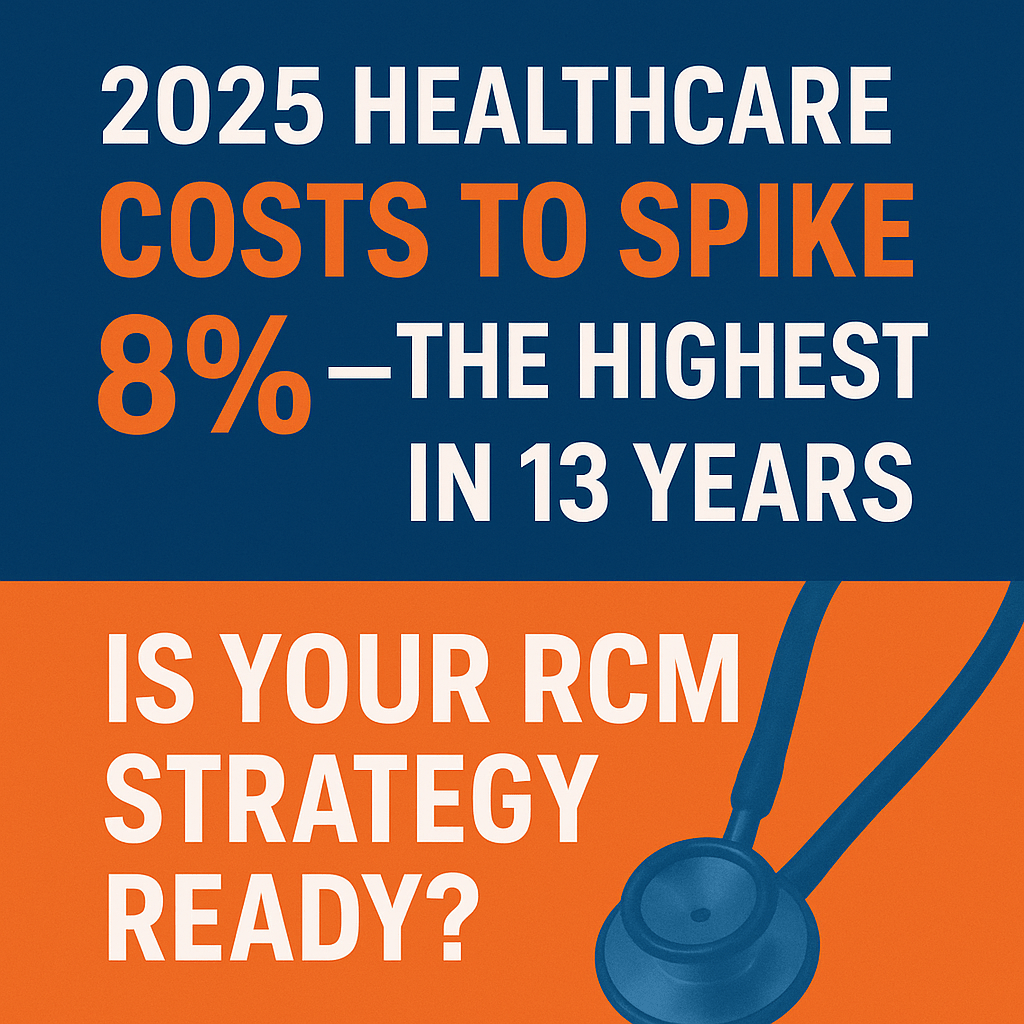
The healthcare cost surge of 2025 isn’t just coming—it’s here. For providers, the real question isn’t whether you’ll feel it, but whether your RCM strategy can keep your margins intact.
Healthcare leaders face a sobering reality: medical costs are expected to climb 8% in 2025, the sharpest increase in 13 years. This isn’t just another statistic—it’s a financial stress test that will separate resilient healthcare organizations from those at risk of collapse.
The Perfect Storm: Why 2025 Is Different 🌪️
Three converging forces are reshaping healthcare costs and revenue:
💊 The GLP-1 Effect: Explosive demand for weight-loss and diabetes drugs like Ozempic and Wegovy is transforming pharmaceutical spending—at premium price tags.
📈 Inflation Squeeze: With inflationary pressure hitting providers’ labor, supplies, and operations, costs are being pushed upward by every component of care delivery.
🧠 Behavioral Health Surge: Rising utilization of mental health services is overwhelming outdated RCM systems and driving new cost pressure.
The RCM Market Responds: A $272B Lifeline 💼
The U.S. RCM market was valued at USD 141.61B in 2024 and is projected to nearly double to USD 272.78B by 2030, growing at a CAGR of about 11.55%. This isn’t just market growth—it’s proof that thousands of providers are turning to RCM innovation as the only path to financial survival.
The Reimbursement-Cost Gap: The New Margin Killer ⚠️
Reimbursements are shrinking. Costs are soaring. The gap between what you’re paid and what it costs to deliver care is now one of the biggest financial risks facing providers. Traditional fee-for-service models are buckling, and value-based care requires advanced RCM systems many organizations simply don’t have.
Five Critical RCM Strategies to Survive 2025 🛠️
1. Slash Denials with AI-Powered Automation
Eliminate manual bottlenecks. AI-driven coding, claim scrubbing, and denial management cut admin costs and boost first-pass resolution.
2.Stop Revenue Loss with Predictive Denial Prevention
Use analytics to flag high-risk claims before submission—cutting denial rates dramatically.
3.Boost Collections 30% with Patient-Friendly Billing
Transparent, digital-first payment experiences increase patient satisfaction and cash flow.
4.Turn Payer Contracts Into Profit Protection
Smart contract management ensures providers aren’t leaving revenue on the table.
5.Gain Real-Time Revenue Visibility
Replace monthly reports with live dashboards that empower leaders to respond instantly.
The Automation Advantage: From Cost Center to Competitive Edge 🤖
Smart providers aren’t just cutting costs—they’re using RCM as a strategic differentiator. The right technology partner provides not just faster claims, but insights that drive clinical and financial decisions.
The 2025 Reality Check: 3 Questions for Every Leader ❓
- Can your RCM system handle an 8% cost surge without choking cash flow?
- Are you prepared for the accelerated shift to value-based models?
- Do you have real-time revenue visibility today—or are you flying blind?
If you hesitated, you’re not alone—but you are at risk.
Beyond Survival: Building Resilience for the Decade Ahead 🔧
The winners of 2025 won’t just survive the margin squeeze. They’ll use it as a catalyst to build intelligent, patient-centric revenue cycle operations. That means:
- Viewing RCM as a strategic investment, not a cost center.
- Partnering with innovators who can anticipate tomorrow’s pressures.
- Leveraging automation and analytics to turn data into profit.
The Time for Action Is Now ⏱️
Healthcare affordability challenges are real—but so are the opportunities for those who act. Every decision you make today defines whether 2025 will break your organization or propel it forward.
👉 Will your RCM strategy carry you through—or hold you back?
The storm is here. But for organizations with the right RCM strategy, it could be the wind that fills their sails.
📚 References
- PwC Health Research Institute (2024). Medical Cost Trend: Behind the Numbers 2025.
- Forecasts an 8% medical cost trend increase in 2025 (highest in 13 years).
- Identifies key drivers: inflation, increased pharmaceutical spending (notably GLP-1 drugs), and growing behavioral health utilization.
- Source: PwC Report
- Revenue Cycle Management (RCM) Market Report (2024).
- Valued the U.S. RCM market at USD 141.61B in 2024.
- Projects growth to USD 272.78B by 2030, with a CAGR of 11.55%.
- Verified Industry Report — Grand View Research